Thailand, the Land of Smiles, offers an irresistible combination of ancient temples, stunning beaches, flavorful cuisine, and legendary hospitality. As Southeast Asia's most visited country, Thailand welcomes over 40 million visitors annually—and for good reason. From the chaotic energy of Bangkok to the tranquil islands of the south, from the misty mountains of the north to ancient temple cities, Thailand provides experiences for every type of traveler. The Thai people's genuine warmth, combined with incredible value for money, world-renowned cuisine, and a tourism infrastructure that caters to all budgets, makes Thailand an ideal destination for first-time Asia travelers and seasoned explorers alike. This comprehensive guide will help you navigate this beautiful kingdom while staying connected throughout your journey.
Bangkok and Major Cities
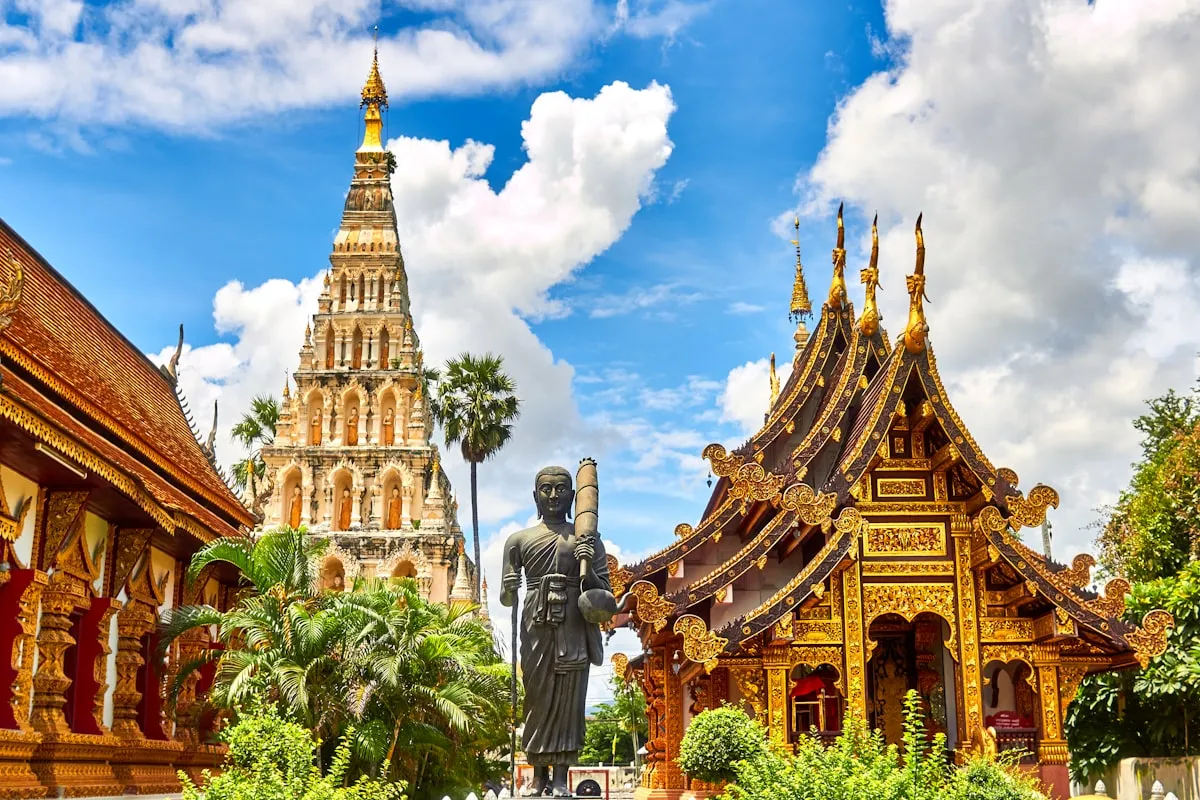
Bangkok is a sensory overload in the best way possible—a city where gleaming skyscrapers tower over golden temples and street vendors cook incredible food around the clock. The Grand Palace and Wat Phra Kaew (Temple of the Emerald Buddha) showcase Thailand's royal heritage, while Wat Arun's spires glisten across the Chao Phraya River. Explore the canals of Thonburi by longtail boat, shop at the massive Chatuchak Weekend Market (over 15,000 stalls!), and discover street food scenes in Chinatown and Ratchawat. Rooftop bars offer stunning skyline views. Chiang Mai, the cultural capital of the north, charms with over 300 temples, cooking schools, and access to hill tribe villages. Pattaya offers beach resort convenience near Bangkok. Phuket Town reveals Sino-Portuguese architecture beyond the beaches. Ayutthaya, the ancient capital, displays UNESCO-listed temple ruins.
Highlights
Regions to Explore
Thailand's geography offers remarkable diversity. The mountainous north around Chiang Mai and Chiang Rai delivers temples, trekking, and hill tribe culture—visit the White Temple (Wat Rong Khun) and the Golden Triangle. Isaan, the northeastern region, offers authentic Thai culture, ancient Khmer temples, and the beautiful Mekong River border. Central Thailand encompasses Bangkok, the ancient capitals of Ayutthaya and Sukhothai, and access to beach getaways. The Andaman coast in the southwest boasts world-famous beaches: Phuket's variety, Krabi's limestone cliffs, and Phi Phi's stunning bays. The Gulf of Thailand islands—Koh Samui, Koh Phangan, and Koh Tao—each offer distinct vibes from luxury to full moon parties to diving. The deep south near Malaysia is less touristy but has beautiful islands like Koh Lipe.
Highlights
Culture and Traditions
Thai culture revolves around Buddhism, monarchy, and respect. Over 90% of Thais are Buddhist, and temples (wat) are central to community life—you'll see orange-robed monks collecting alms each morning. The monarchy is deeply revered and legally protected; always show respect. The concept of "sanuk" (fun) and "mai pen rai" (no worries) captures the Thai approach to life. Saving face is crucial—avoid confrontation and public displays of anger. The traditional wai greeting (palms pressed together with a slight bow) is used for respect, thanks, and apology. Songkran (Thai New Year, April 13-15) transforms the country into a massive water fight celebrating renewal. Loy Krathong (November) sees floating offerings on waterways. The annual Vegetarian Festival in Phuket features extreme displays of devotion.
Highlights
Thai Gastronomy
Thai cuisine is among the world's most beloved, balancing sweet, sour, salty, and spicy in every dish. Street food is not only delicious but incredibly affordable—many of Bangkok's best meals cost under $2. Essential dishes include pad thai (stir-fried noodles), green and red curries, tom yum soup (spicy and sour), som tam (papaya salad), and massaman curry. Each region has specialties: the north offers khao soi (curry noodle soup), Isaan is famous for larb (minced meat salad) and sticky rice, and the south brings Muslim-influenced curries. Mango sticky rice is the quintessential dessert. Night markets offer endless variety—try grilled meats on sticks, fresh coconut ice cream, and pad kra pao (basil stir-fry). Thai iced tea and fresh fruit smoothies combat the heat. Cooking classes in Chiang Mai and Bangkok are hugely popular.
Highlights

Getting Around Thailand
Thailand has well-developed transportation. Domestic flights connect major destinations cheaply—Bangkok to Chiang Mai or Phuket takes an hour and costs as little as $30 booked ahead. Trains are scenic and affordable, with sleeper services from Bangkok to Chiang Mai or the south; book first or second class for comfort. Long-distance buses are frequent and cheap, though quality varies. VIP buses offer reclining seats and snacks. Within Bangkok, the BTS Skytrain and MRT metro cover central areas efficiently; taxis are cheap but use the meter (insist on it). Grab (like Uber) is widely used. Songthaews (shared pickup trucks) and tuk-tuks provide local transport. Ferries connect mainland to islands. Motorbike rental is popular but dangerous—always wear a helmet and have proper insurance.
Highlights
Where to Stay
Thailand offers exceptional value at every level. Luxury resorts, particularly on islands, rival the world's best at a fraction of Western prices. Five-star hotels in Bangkok and Chiang Mai cost what three-stars cost elsewhere. Mid-range boutique hotels and serviced apartments are abundant. Budget travelers find clean, comfortable guesthouses for $10-20/night. Hostels have proliferated in backpacker areas. Airbnb operates widely, offering condos with pools. On islands, beachfront bungalows range from basic to luxurious. In Bangkok, stay in Sukhumvit for nightlife and shopping, Silom for business, Riverside for heritage hotels, or Khao San for backpackers. In Chiang Mai, the Old City puts temples at your doorstep. Book ahead during high season (November-February), Songkran, and holidays.
Highlights
Budget and Money
Thailand uses the Thai Baht (THB/฿). It remains one of the world's best-value destinations. Budget travelers can manage comfortably on ฿1,000-1,500/day ($30-45) with guesthouse accommodation, street food, and local transport. Mid-range travelers spending ฿2,500-4,000/day ($75-120) enjoy comfortable hotels, restaurant meals, and activities. Luxury travel starts at ฿6,000+/day ($180+), though Thai luxury remains a bargain globally. Bangkok is more expensive than rural areas; islands cost more during high season. Cash is widely used, though cards work in larger establishments. ATMs charge ฿220 per withdrawal—withdraw larger amounts less frequently. Tipping isn't traditionally expected but has become common in tourist areas—20-50 baht for good service. Bargaining is expected at markets and for tuk-tuks, but not in malls or with meters.
Highlights

Safety and Health
Thailand is generally safe for travelers, but common-sense precautions apply. Petty theft and scams targeting tourists occur—beware of gem scams, tuk-tuk commissions, and overly friendly strangers with business propositions. Motorbike accidents are the leading cause of tourist injuries—drive defensively if you rent, always wear a helmet, and ensure proper insurance. Food and water safety is good in established restaurants and street stalls; drink bottled water. Mosquito-borne diseases (dengue, malaria in border areas) require repellent use, especially at dusk. Healthcare is excellent in Bangkok and major cities—private hospitals like Bumrungrad are world-renowned. Travel insurance is essential. The tourist police (1155) can help with issues. Respect strict lèse-majesté laws regarding the monarchy.
Highlights
Best Time to Visit
Thailand has three seasons varying by region. The cool season (November-February) offers the best weather for most areas—lower humidity, comfortable temperatures, and minimal rain. This is peak tourist season with higher prices. The hot season (March-May) brings scorching temperatures (35-40°C), especially in April before the monsoon. The rainy season (June-October) sees afternoon downpours, but travel is still possible between showers—prices drop significantly. The Gulf islands (Koh Samui, Koh Phangan, Koh Tao) have opposite patterns—avoid November-December when monsoons hit. The Andaman coast (Phuket, Krabi) is best November-April. Songkran (April 13-15) and Loy Krathong (November full moon) are magical times despite crowds.
Highlights
Suggested Itineraries
For one week, focus on one region: Bangkok (3 days) with temple visits, markets, and food tours + beach time in Phuket/Krabi area (4 days). Two weeks allows the classic route: Bangkok (3 days) → Ayutthaya day trip → Chiang Mai (3 days) with temple and cooking class → fly to Phuket/Krabi (4 days) → island hopping to Phi Phi or Koh Lanta (3 days). For beach focus: Bangkok (2 days) → Koh Samui (4 days) → Koh Phangan or Koh Tao (4 days). Adventure seekers: Bangkok (2 days) → Chiang Mai (3 days) with trekking → Pai (3 days) → Chiang Rai (2 days). Off-the-beaten-path: Add Isaan's Khmer temples, Kanchanaburi's River Kwai history, or the Similan Islands for diving. Always build in flexibility—Thailand rewards spontaneity.
Highlights

Stay Connected with eSIM
Staying connected in Thailand enhances every aspect of your trip. Use Google Maps for navigation through Bangkok's maze of streets, translate Thai menus and signs, book island ferries and last-minute tours, check weather for island hopping, and share your Thai adventure in real-time. Thailand has excellent 4G coverage across the country, including most islands (though remote beaches may have limited signal). Traditional roaming from your home carrier can quickly become expensive. With an eSIM from eSIM Go Fly, you get affordable, high-speed data throughout Thailand. Simply purchase and activate before departure—you'll be connected the moment you land at Suvarnabhumi, Don Mueang, or Phuket airport. No need to find a phone shop or deal with Thai-language activation. Your eSIM works alongside your regular number, so you won't miss important calls while relaxing on a Phi Phi beach.
Highlights
Essential Travel Tips for Thailand
- Always respect the monarchy—it's the law and deeply important to Thais. Stand for the royal anthem before movies.
- Dress modestly at temples: cover shoulders and knees, and remove shoes before entering buildings
- Never point your feet at Buddha images or people—feet are considered the lowest part of the body
- Don't touch anyone's head—it's considered the highest and most sacred part of the body
- In Bangkok, always insist taxi drivers use the meter ("meter, dai mai?") or negotiate before getting in
- Bargaining is expected at markets and with tuk-tuks, but keep it friendly and smiling
- Street food is safe and delicious—look for stalls with high turnover and locals eating there
- Stay hydrated—Thailand is hot and humid. Carry water and drink coconut juice from street vendors.
- Don't buy drinks from strangers or leave drinks unattended in nightlife areas
- Beware of common scams: gem shops, "closed today" temple tours, overly friendly strangers with business tips
- Always wear a helmet when on a motorbike—it's the law and accidents are the leading tourist injury
- Download the Grab app for reliable, metered taxi/motorbike rides
- ATMs charge ฿220 fee—withdraw larger amounts (฿10,000-20,000) less frequently
- Learn basic Thai: "Sawadee krap/ka" (hello), "Khop khun krap/ka" (thank you)
- Full moon parties on Koh Phangan can be chaotic—secure valuables and stay with friends
Stay Connected
Get instant mobile data with our eSIM plans. No roaming fees, easy activation, and reliable coverage throughout your trip.
View eSIM Plans