Germany captivates visitors with its rich history, world-renowned beer culture, stunning castles, and vibrant cities. As Europe's largest economy and a cultural powerhouse, Germany offers an remarkable diversity of experiences across its 16 federal states. From the reunified capital of Berlin with its cutting-edge art scene to Bavaria's fairy-tale castles and Alpine meadows, from the romantic Rhine Valley to the Baltic Sea coast, Germany rewards travelers with efficiency, quality, and unexpected warmth beneath its organized exterior. With 52 UNESCO World Heritage Sites, legendary automotive heritage, and a beer culture dating back centuries, this comprehensive guide will help you explore Germany's diverse regions while staying connected throughout your journey.
Berlin and Major Cities
Berlin is a city transformed, where Cold War history meets cutting-edge creativity. The Brandenburg Gate symbolizes reunification, while the East Side Gallery preserves the Berlin Wall as street art. Museum Island houses world-class collections, and the Reichstag dome offers stunning views. Neighborhoods like Kreuzberg and Prenzlauer Berg pulse with cafés, galleries, and legendary nightlife. Munich, Bavaria's elegant capital, balances beer halls and high culture with the Marienplatz, world-class museums, and proximity to the Alps. Hamburg, Germany's gateway to the world, impresses with its harbor, Elbphilharmonie concert hall, and Reeperbahn nightlife. Frankfurt serves as the financial heart, with a stunning skyline and excellent museums along the Main river. Cologne charms with its magnificent Gothic cathedral and carnival celebrations. Dresden has risen from the ashes to showcase baroque splendor in its restored Altstadt.
Highlights
Regions to Explore
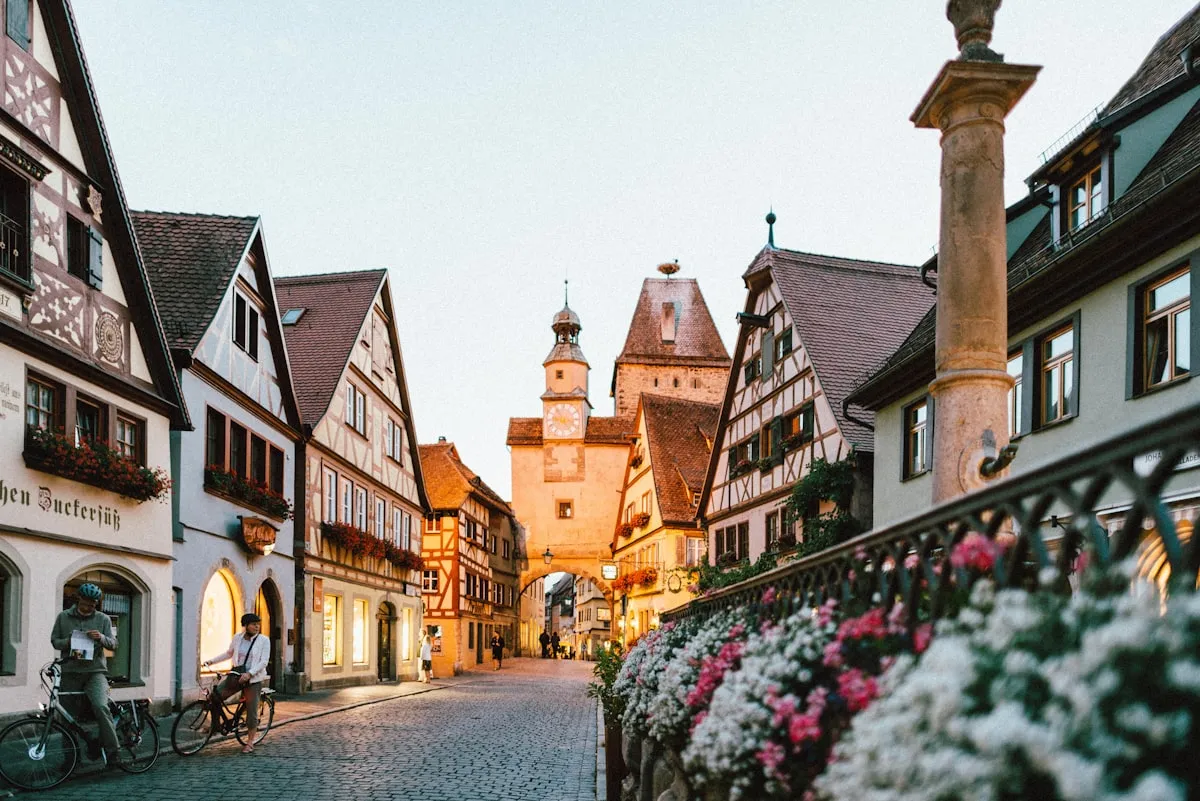
Germany's regions offer remarkably diverse experiences. Bavaria in the south enchants with fairy-tale castles like Neuschwanstein, Alpine landscapes, and deep-rooted traditions. The Romantic Road winds through medieval towns like Rothenburg ob der Tauber. The Rhine Valley, a UNESCO site, features dramatic castles perched above vineyards—best experienced by scenic boat cruise. The Black Forest delivers dense woodlands, cuckoo clocks, and spa towns like Baden-Baden. Saxony surprises with Dresden's baroque beauty and Leipzig's musical heritage. The Baltic Coast offers sandy beaches, historic Hanseatic cities like Lübeck and Rostock, and the chalk cliffs of Rügen Island. The Moselle Valley rivals the Rhine for wine culture with fewer tourists. The Harz Mountains provide hiking, historic mining towns, and the steam-powered Brocken Railway.
Highlights
Culture and Traditions
German culture prizes efficiency, punctuality, and quality—trains run on time, and craftsmanship matters. Yet beneath the organized exterior lies warmth and rich traditions. Beer culture runs deep, with over 1,500 breweries and the Reinheitsgebot (beer purity law) dating to 1516. Oktoberfest in Munich is the world's largest folk festival, though local beer festivals occur nationwide. Christmas markets transform city squares from late November with Glühwein, handcrafted ornaments, and festive atmosphere—Nuremberg, Dresden, and Cologne host the most famous. Regional identities are strong; Bavarians are proudly different from Prussian Berliners. Football (soccer) unites the nation, with Bundesliga matches drawing passionate crowds. Germany's classical music heritage includes Bach, Beethoven, and Brahms, with world-class orchestras and opera houses. The concept of "Gemütlichkeit"—cozy contentment—defines German social life.
Highlights
German Gastronomy
German cuisine extends far beyond sausages and sauerkraut, though both are excellent. Each region has specialties: Bavarian Weisswurst (white sausage) with sweet mustard, Rhineland Sauerbraten (marinated roast), Berlin's Currywurst, Hamburg's fish sandwiches, and Swabian Spätzle (egg noodles). Bread is a national treasure—Germany has over 3,000 registered bread varieties. Bakeries (Bäckereien) serve fresh pretzels, rolls, and pastries daily. Beer varies by region: Pilsner in the north, wheat beer (Weißbier) in Bavaria, Kölsch in Cologne, and Altbier in Düsseldorf—each city fiercely loyal to its style. German wines, particularly Riesling from the Rhine and Moselle valleys, rank among the world's finest. Hearty breakfasts feature cold cuts, cheeses, fresh bread, and soft-boiled eggs. The afternoon Kaffee und Kuchen (coffee and cake) tradition remains beloved.
Highlights

Getting Around Germany
Germany's transportation network is excellent. Deutsche Bahn (DB) operates an extensive rail system, with ICE high-speed trains connecting major cities quickly—Berlin to Munich takes 4 hours. The Germany Rail Pass offers flexible unlimited travel for tourists. Regional trains reach smaller towns efficiently. Book tickets early for the best prices on bahn.de. FlixBus provides budget-friendly intercity connections. Renting a car unlocks the legendary Autobahn (with some sections having no speed limit) and scenic countryside routes. Germany's road quality is superb, though parking in cities is expensive and limited. Cities have excellent public transport: U-Bahn (metro), S-Bahn (suburban rail), trams, and buses—all usually integrated into single ticket systems. Cycling infrastructure is outstanding, with dedicated bike paths even between cities. Many cities offer bike-sharing programs.
Highlights
Where to Stay
Germany offers quality accommodation at every price point. Luxury hotels include grand establishments in major cities and castle hotels (Schlosshotels) in the countryside. Mid-range hotels are reliably clean and well-run, with chains like Motel One offering modern design at reasonable prices. Gasthaus and Gasthof properties combine traditional charm with attached restaurants serving local cuisine. Budget travelers find excellent hostels (Jugendherbergen) with the DJH network offering quality properties even in scenic locations. Airbnb is popular but regulated in some cities—check local rules. Ferienwohnungen (vacation apartments) provide self-catering options for longer stays. In Berlin, stay in Mitte for central access, Kreuzberg for atmosphere, or Prenzlauer Berg for trendy vibes. In Munich, the city center is compact and walkable. Book ahead for Oktoberfest, Christmas markets, and major trade fairs.
Highlights
Budget and Money
Germany uses the Euro (€). Budget travelers can manage on €50-70/day with hostel accommodation, bakery lunches, and self-catering. Mid-range travelers should expect €120-180/day with comfortable hotels, restaurant meals, and attractions. Luxury travel starts at €250+/day. Munich and Frankfurt are more expensive than Berlin or eastern cities. Cash remains king in Germany—many restaurants, bakeries, and smaller shops don't accept cards (look for "Nur Bargeld" signs). Always carry some cash. ATMs (Geldautomaten) are plentiful. Tipping is appreciated but not obligatory—round up or add 5-10% for good service. Most museums offer reduced rates for students and seniors. Many attractions close on Mondays. The Deutschland-Ticket (€49/month) offers unlimited local and regional public transport nationwide—excellent value for extended stays.
Highlights

Safety and Health
Germany is very safe for travelers, with low crime rates and efficient emergency services. Pickpocketing can occur in tourist areas and on public transport in major cities, particularly during busy events. Use common sense with valuables. German healthcare is excellent; EU citizens should carry EHIC/GHIC cards, while others need travel insurance. Pharmacies (Apotheken, marked with red "A") can advise on minor ailments and sell many medications. Tap water is safe and excellent throughout Germany. The emergency number is 112 for all services. German police (Polizei) are professional and many speak English. Be cautious of cyclist lanes—they're often on sidewalks and cyclists have right of way. Swimming in lakes and rivers is common but pay attention to posted warnings and currents.
Highlights
Best Time to Visit
Germany is a year-round destination with distinct seasonal charms. Spring (April-May) brings blooming gardens, outdoor café culture, and pleasant temperatures without peak crowds. Summer (June-August) offers warm weather, beer gardens, outdoor festivals, and long daylight hours—peak season with higher prices. Autumn (September-October) delivers Oktoberfest (mid-September to early October), wine harvest season, and beautiful fall colors. Winter (November-February) brings magical Christmas markets (late November-December 23), cozy Gemütlichkeit, and skiing in the Alps. Temperatures vary by region—the north is milder but rainier, Bavaria has cold winters and warm summers. Easter and Christmas periods see domestic travel peaks. Major trade fairs in Frankfurt, Munich, and Düsseldorf can spike hotel prices significantly.
Highlights
Suggested Itineraries
For one week, focus on a region: Berlin (3 days) with a day trip to Potsdam plus Munich (3 days) with Neuschwanstein Castle day trip—connected by 4-hour ICE train. Two weeks allows the classic route: Berlin (3 days) → Dresden (1 day) → Munich (3 days) → Romantic Road towns (2 days) → Rhine Valley (2 days) → Cologne (1 day) → Hamburg (2 days). For fairy-tale Germany: Munich → Neuschwanstein → Rothenburg → Heidelberg → Rhine castles. Beer enthusiasts should explore Munich, Bamberg (UNESCO brewing heritage), and Cologne. Christmas market touring: Nuremberg → Dresden → Cologne → Rothenburg (late November-December). The German Alpine Road offers spectacular driving from Lindau to Berchtesgaden. Allow flexibility for weather and spontaneous discoveries.
Highlights

Stay Connected with eSIM
Staying connected in Germany enhances your travel efficiency. Use Deutsche Bahn apps for real-time train schedules, Google Maps for navigation, translate menus at traditional restaurants, and share your German adventures instantly. Germany has excellent 4G/5G coverage throughout the country, including rural areas and autobahn routes. Traditional roaming charges from your home carrier can quickly become expensive, particularly during longer European trips. With an eSIM from eSIM Go Fly, you get affordable, high-speed data throughout Germany. Simply purchase and activate before departure—you'll be connected the moment you land at Frankfurt, Munich, Berlin, or any German airport. No need to search for a Telekom or Vodafone shop or deal with German-language activation. Your eSIM works seamlessly alongside your regular number, so you won't miss important calls while exploring Neuschwanstein or navigating Berlin's nightlife.
Highlights
Essential Travel Tips for Germany
- Germans are punctual—trains depart exactly on time, and being late is considered disrespectful
- Cash is king: many restaurants, bakeries, and shops don't accept cards—always carry euros
- Sundays are quiet: most shops are closed, but restaurants, museums, and attractions are open
- Separate your recycling—Germans take Mülltrennung seriously with color-coded bins
- Jaywalking is frowned upon, especially when children are present—wait for the green light
- Tap water is safe and excellent; ask for "Leitungswasser" at restaurants (though some charge)
- Service is included in restaurant prices, but rounding up or adding 5-10% is appreciated
- Learn basic phrases: "Guten Tag" (hello), "Bitte" (please), "Danke" (thank you)
- Quiet hours (Ruhezeit) are observed: no loud noise 1-3pm and after 10pm in residential areas
- Book train tickets early on bahn.de for significant savings over walk-up prices
- Watch for bike lanes on sidewalks—cyclists have priority and won't slow down
- Oktoberfest reservations for tents should be made months in advance
- Christmas markets typically run late November to December 23—not through Christmas
- The €49 Deutschland-Ticket offers unlimited regional transit nationwide
- Many museums are closed on Mondays; check opening hours before visiting
Stay Connected
Get instant mobile data with our eSIM plans. No roaming fees, easy activation, and reliable coverage throughout your trip.
View eSIM Plans