Australia is a continent, a country, and an island all wrapped into one extraordinary destination. This ancient land—the world's oldest continuous culture has called it home for over 65,000 years—offers experiences found nowhere else on Earth. From the iconic sails of the Sydney Opera House to the sacred red rock of Uluru glowing at sunset, from the underwater wonderland of the Great Barrier Reef to the rugged wilderness of Tasmania, Australia rewards travelers with unique wildlife, stunning landscapes, and a famously laid-back culture. The country's isolation has produced remarkable endemic species—koalas, kangaroos, platypuses, and countless others exist only here. Despite its vastness (roughly the size of the contiguous United States), Australia's population concentrates in cosmopolitan coastal cities where world-class dining, coffee culture, and beach lifestyle define daily life. Our comprehensive guide will help you navigate this magnificent country while staying connected across its vast distances.
Sydney and Major Cities
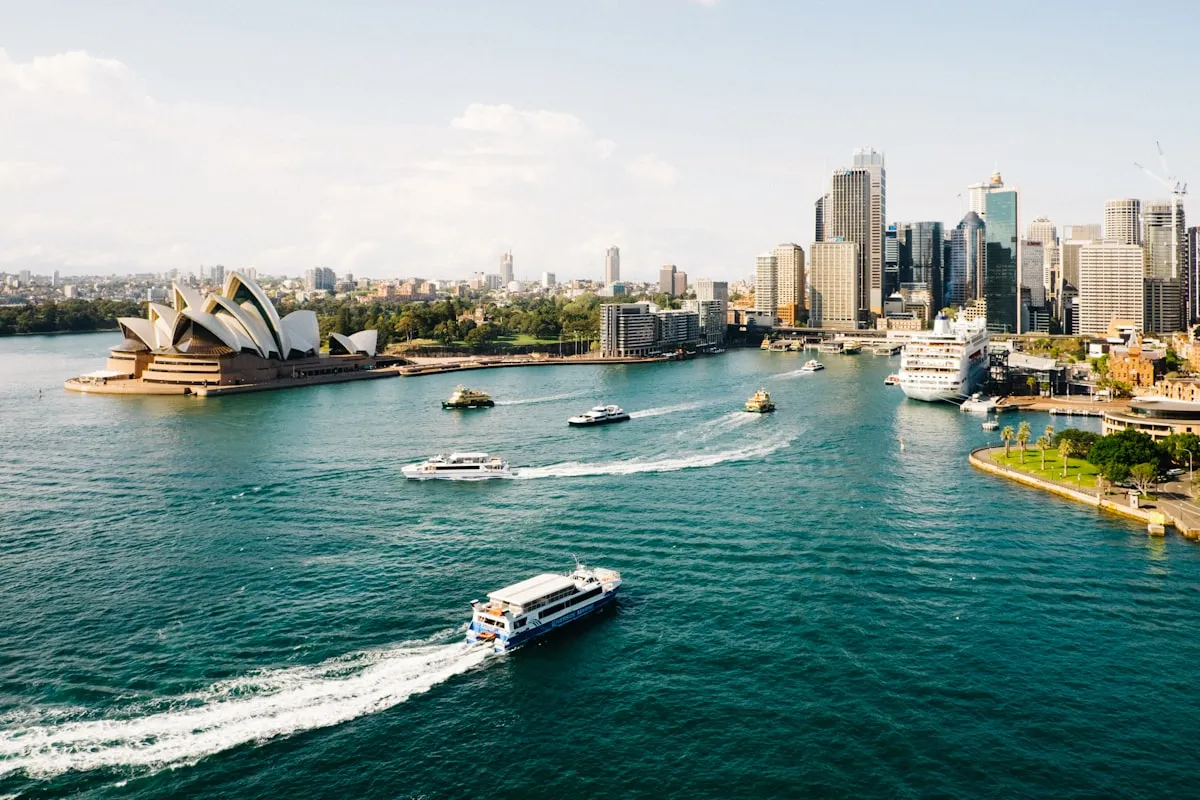
Sydney dazzles as Australia's largest city, built around one of the world's most stunning natural harbors. The Sydney Opera House and Harbour Bridge form an iconic duo—climb the bridge for panoramic views or tour the opera house's architectural marvel. Circular Quay buzzes with ferries connecting harborside destinations. The Rocks neighborhood preserves convict-era history alongside weekend markets. Bondi Beach epitomizes Australian beach culture, connected by a spectacular coastal walk to Coogee. Darling Harbour offers waterfront dining and the impressive SEA LIFE Aquarium. Melbourne rivals Sydney as Australia's cultural capital, with a food and coffee scene that ranks among the world's best. Explore hidden laneways covered in street art and filled with specialty coffee roasters. The MCG and Australian Open put Melbourne at the center of Australian sport. Brisbane has transformed from sleepy capital to vibrant subtropical city with South Bank's cultural precinct and proximity to the Gold Coast's beaches. Perth, Australia's most isolated major city, surprises with beautiful beaches, excellent wineries in the Swan Valley, and gateway access to Western Australia's wilderness.
Highlights
Regions to Explore
Australia's regions offer dramatically different experiences. Queensland delivers tropical adventures: Cairns and Port Douglas provide Great Barrier Reef access, the Whitsunday Islands offer sailing paradise, and the Daintree Rainforest is the world's oldest tropical rainforest. The Gold Coast combines surf beaches with theme parks. New South Wales extends beyond Sydney with the Blue Mountains' dramatic scenery just two hours away, the Hunter Valley wine region, and Byron Bay's alternative coastal vibe. Victoria's Great Ocean Road is one of the world's great coastal drives, featuring the Twelve Apostles limestone stacks. The Grampians offer bushwalking and Aboriginal rock art. South Australia centers on Adelaide's food and wine culture, with world-class regions like the Barossa Valley and McLaren Vale within easy reach. Kangaroo Island provides wildlife encounters in pristine settings. Tasmania, Australia's island state, impresses with wilderness—Cradle Mountain and the Overland Track for serious hikers, historic Port Arthur, and Hobart's emerging food scene. Western Australia's vast outback includes the Kimberley region's ancient landscapes and remarkable Ningaloo Reef, less crowded than the GBR. The Northern Territory holds Uluru-Kata Tjuta, Kakadu's wetlands and rock art, and the top end's tropical frontier.
Highlights
Culture and Traditions
Australian culture blends Indigenous heritage, British colonial foundations, and multicultural influences into something distinctly its own. Indigenous Australian culture, the world's oldest continuous culture, is increasingly accessible and respected—visit cultural centers, take Indigenous-led tours, and learn about Dreamtime stories that have shaped this land for millennia. The convict era left its mark in architecture and the famous Australian irreverence toward authority. "Mateship" remains a core value: Australians value loyalty, fairness, and not taking yourself too seriously. The "tall poppy syndrome" means boasting is frowned upon. Beach culture is fundamental—summer revolves around surf, sand, and barbecues. Surf life saving clubs are community institutions. Sports unite Australians: AFL (Australian Rules Football) dominates in Victoria and South Australia, rugby codes in NSW and Queensland, and cricket nationwide during summer. Australia Day (January 26) is the national holiday, though its date is increasingly debated regarding Indigenous perspectives. The arts scene thrives: Sydney and Melbourne host world-class festivals, and the country has produced globally influential musicians, actors, and artists.
Highlights
Gastronomy
Australian cuisine has evolved from meat pies and lamingtons to one of the world's most exciting food scenes. Modern Australian ("Mod Oz") cooking celebrates exceptional local produce with influences from Asian, Mediterranean, and Pacific cuisines. Melbourne and Sydney compete for culinary supremacy, both offering everything from innovative fine dining to excellent casual eateries. Coffee culture is serious—Australians pioneered the flat white and expect barista-quality coffee everywhere. Brunch is practically a religion, with avocado toast becoming a global phenomenon. Meat pies remain beloved, especially at sporting events. Fresh seafood shines: try Barramundi, Moreton Bay bugs, and Sydney rock oysters. Bush tucker—native ingredients like macadamia nuts, lemon myrtle, finger lime, and kangaroo meat—increasingly features in contemporary cooking. Wine regions produce world-class bottles: Barossa Valley shiraz, Hunter Valley semillon, Yarra Valley pinot noir, and Margaret River cabernet. Australian craft beer has exploded, with local breweries in every city. For authentic experiences, seek out weekend farmers' markets in every major city. Food halls and hawker-style markets showcase multicultural influences.
Highlights

Transportation
Australia's size means transportation planning is essential. Flying between major cities is common and often necessary—Sydney to Perth is 4+ hours, roughly equivalent to crossing the continental US. Domestic carriers Qantas, Virgin Australia, and budget options Jetstar and Rex connect cities frequently. Book ahead for better fares. Road trips are quintessentially Australian: the Great Ocean Road, Pacific Highway, and Stuart Highway (Adelaide to Darwin) rank among great driving routes. Renting a car offers maximum flexibility, especially for regional exploration. Drive on the left side. Distances are vast—Melbourne to Sydney is 9 hours, Sydney to Brisbane 10 hours. Fuel prices vary; outback servos (service stations) are expensive. For remote outback travel, 4WD vehicles are often required—ensure proper preparation for isolated areas. City public transit varies: Sydney has trains, buses, ferries, and light rail with the Opal card. Melbourne's trams are iconic and free in the city center. Brisbane and Perth have adequate bus networks. Uber operates in major cities. For unique experiences, consider the Ghan (Adelaide-Darwin) or Indian Pacific (Sydney-Perth) rail journeys, though these are multi-day adventures rather than practical transport.
Highlights
Accommodation
Australian accommodation caters to all budgets and styles. Major hotel chains operate throughout cities, with rates highest in Sydney's CBD. Boutique hotels flourish in trendy neighborhoods of Melbourne, Sydney, and Brisbane. Australian motels line highways and offer clean, affordable rooms perfect for road trips—look for names like Quest and Best Western. Hostels provide budget accommodation in backpacker hotspots; YHA operates quality options nationwide. For unique experiences, stay in the Outback—wilderness lodges near Uluru, cattle station stays, and glamping experiences offer unforgettable nights. Great Barrier Reef islands range from luxury resorts (Lizard Island, Hayman Island) to more accessible options (Hamilton Island, Fitzroy Island). Tasmania's wilderness lodges and farm stays provide rustic charm. Holiday parks with cabins offer good value for families, especially in coastal areas. Airbnb operates widely, particularly useful in beach towns and regional areas. Camping is excellent in national parks—book sites in advance during school holidays and peak seasons. Farm stays and working holiday arrangements suit longer-term visitors seeking authentic rural experiences.
Highlights
Budget and Money
The Australian Dollar (AUD) is the currency. Credit cards are widely accepted, with contactless payment ubiquitous—Australia was an early adopter of tap-and-go. ATMs are common in cities, though remote areas may have limited access. Australia is relatively expensive for travelers, comparable to Western Europe. Budget travelers can manage on $100-150 AUD daily using hostels, cooking some meals, and utilizing free activities (beaches, bushwalks, city parks). Mid-range budgets of $200-350 AUD allow comfortable hotels, restaurant meals, and tours. Luxury easily exceeds $500+ AUD daily at premium resorts and fine dining. Dining out is pricier than in Asia or North America—expect $20-35 for main courses at mid-range restaurants. Coffee runs $4-5, and casual meals $15-25. Supermarkets like Coles and Woolworths offer reasonable grocery prices. Tipping is not mandatory and not expected at casual eateries; at upscale restaurants, 10% is generous. Wages are relatively high in Australia, which contributes to service costs. Fuel costs around $1.80-2.20/liter depending on location and type. National park entry fees vary by state; consider annual passes for extended stays.
Highlights

Safety and Health
Australia is very safe for travelers, with low violent crime rates. Standard urban precautions apply—secure valuables and avoid deserted areas at night. The main safety considerations relate to nature: the sun is intense due to the ozone hole, so "slip, slop, slap" (slip on a shirt, slop on sunscreen, slap on a hat) is essential. Reef-safe sunscreen is mandatory for Great Barrier Reef visits. Ocean safety requires attention: swim between the flags at patrolled beaches (red and yellow flags indicate safe areas), be aware of rip currents, and heed warning signs about jellyfish (box jellyfish in northern waters November-May). Australia's wildlife reputation is exaggerated but deserves respect: snakes and spiders exist but encounters are rare in urban areas; don't put hands under rocks or into holes. In the tropical north, be aware of crocodiles—never swim in unknown waterways. Marine stingers require protective suits in northern waters during stinger season. Healthcare is excellent but expensive for non-residents—travel insurance is essential. Pharmacies (chemists) are widely available. For emergencies, dial 000 for police, fire, and ambulance. In remote areas, carry emergency supplies, extra water, and inform someone of your travel plans.
Highlights
Best Time to Visit
Australia's seasons are opposite to the Northern Hemisphere. Summer (December-February) brings hot weather perfect for southern cities, Tasmania, and beach destinations, but can be uncomfortably hot in the outback and tropical north. Australian summer coincides with Christmas holidays and peak season—expect crowds and higher prices. Autumn (March-May) is excellent across most of the country, with comfortable temperatures, autumn colors in some regions, and fewer crowds. Winter (June-August) is ideal for the tropical north (dry season for Queensland, Northern Territory, and northern Western Australia), the Great Barrier Reef (optimal diving conditions), and the outback. Southern cities are mild but cooler; ski resorts operate in the Snowy Mountains and Victorian Alps. Spring (September-November) offers wildflower season in Western Australia, comfortable weather in most regions, and the run-up to summer. School holidays (mid-December to late January, two weeks each around Easter, June/July, and September/October) see domestic travel peak—book accommodation and tours well ahead. The best time varies dramatically by destination: reef visits favor winter, outback trips suit autumn/winter, and southern cities are year-round destinations.
Highlights
Suggested Itineraries
One Week - East Coast Highlights: Sydney (3 days) for Opera House, Harbour Bridge, Bondi, The Rocks, and optional Blue Mountains day trip. Fly to Cairns (3-4 days) for Great Barrier Reef snorkeling/diving, Daintree Rainforest, and possibly Kuranda. Two Weeks - Extended East Coast: Add Melbourne (3-4 days) with laneways, food, and Great Ocean Road day trip or overnight. Include Brisbane and Gold Coast (2 days) between Sydney and Cairns. Alternatively, add Whitsunday Islands for sailing and beach time. Three Weeks or More: Include the Red Centre—fly to Alice Springs or Uluru for 3-4 days to experience Uluru at sunrise/sunset, Kata Tjuta, Kings Canyon, and Alice Springs. Add Tasmania (5-7 days) for Hobart, Cradle Mountain, and wilderness. Or explore Western Australia: Perth, Margaret River wine region, and possibly the Ningaloo Reef or Kimberley. Classic Road Trips: Great Ocean Road (3-4 days from Melbourne), Pacific Highway Sydney to Brisbane (1-2 weeks with stops), Stuart Highway Adelaide to Darwin (1-2 weeks). For wildlife: Kangaroo Island from Adelaide, Phillip Island from Melbourne, or Tasmania for unique species.
Highlights

Staying Connected
Staying connected in Australia requires awareness of its vast distances. Mobile coverage (4G/5G) is excellent in cities and along major highways but limited to non-existent in remote areas and the outback. Major carriers are Telstra (best regional coverage), Optus, and Vodafone. An eSIM provides convenient connectivity without finding physical SIM vendors—ideal for arriving travelers. For outback travel, satellite phones or emergency beacons (PLBs) may be necessary. Free WiFi is available at most hotels, cafes, and airports, though quality varies. Public libraries offer free internet access. Essential apps include Google Maps (download offline areas for remote regions), BOM (Bureau of Meteorology) weather app for accurate forecasts, TripView for Sydney/Melbourne transit, and fuel apps like Petrol Spy for finding cheap fuel. Australia uses Type I electrical outlets at 230V—bring adapters if coming from US/Europe/UK. For the Great Barrier Reef, Outback, and national parks, download maps, content, and entertainment before losing coverage. Having reliable data transforms navigation, accommodation booking, and discovering local experiences throughout your Australian adventure.
Highlights
Travel Tips for Australia
- Distances are vast—domestic flights are often necessary and worthwhile
- Sun protection is essential: wear sunscreen (SPF 50+), hat, and sunglasses daily
- Swim only between the red and yellow flags at patrolled beaches
- Wildlife is unique but respect it: don't feed animals and watch for snakes in bush areas
- Tipping is not mandatory; 10% at upscale restaurants is generous
- Coffee culture is serious—skip Starbucks and find local roasters for quality brews
- Book accommodation and tours during school holidays well in advance
- Reef visits require reef-safe sunscreen—check before you go
- Carry cash for small towns and markets; cards work everywhere in cities
- Learn some Aussie slang: arvo (afternoon), servo (gas station), bottle-o (liquor store)
- Indigenous cultural sites are sacred—follow all guidelines and respect restrictions
- For outback driving, carry extra water, fuel, and inform someone of your route
- National park fees apply in most states; consider annual passes for extended visits
- Public toilets are clean and generally free throughout the country
- The metric system is used: distances in kilometers, temperatures in Celsius
Stay Connected
Get instant mobile data with our eSIM plans. No roaming fees, easy activation, and reliable coverage throughout your trip.
View eSIM Plans